Before we start an Aeroseal job in Altamonte Springs, we take ten minutes with every homeowner to cover three things: what's in the sealant, who should step outside while we work, and what to do in the hour after we leave. Most families don't need more than that. This page is the written version of that conversation — specific to Altamonte Springs homes, honest about what matters, and skipping anything that doesn't.
We've completed aeroseal HVAC air duct sealing jobs all over Altamonte Springs and Seminole County. The homeowners who have the smoothest experience are almost always the ones who went in knowing what to expect. So whether you're scheduling for the first time or trying to figure out what questions to ask the company you're vetting, here's what we know from the work.
TL;DR Quick Answers
What Is Air Duct Sealing in Altamonte Springs?
Air duct sealing in Altamonte Springs is the process of closing leaks, gaps, and disconnected joints inside your home's HVAC duct system so that conditioned air actually reaches the rooms it's meant to reach. Aeroseal is the method we use — and the one that works best for the type of homes we see throughout Seminole County.
What it fixes: Leaky ducts lose 20 to 30 percent of conditioned air before it reaches your living areas. Sealing closes those paths.
How Aeroseal works: A technician pressurizes your duct system and injects a water-based polymer mist. Particles collect at leak edges and seal them from the inside — no drywall cutting required.
Why it matters in Altamonte Springs specifically: Homes here run AC twelve months a year with ducts routed through hot attic spaces. Leakage in that environment costs more energy — and more money — than it would almost anywhere else in the country.
What you get when it's done: A verified before-and-after leakage report. You see the actual numbers, not just a technician's assurance.
Typical cost range: $1,500 to $3,500 for most Altamonte Springs single-family homes, depending on size and duct complexity.
Top Takeaways
The sealant is genuinely safe: Aeroseal's water-based polymer was developed through research funded by the EPA and the U.S. Department of Energy. It's UL-tested and non-toxic once cured.
Ventilate after the job: Open windows or run exhaust fans for at least 30 to 60 minutes after service. It clears residual airborne particles and speeds up the already-short return time.
Get pets and sensitive occupants out: Infants, anyone with asthma, and pets should leave for the duration of service and stay out for 1 to 2 hours after. That's the standard, not a special precaution.
Ask your technician how they contain the workspace: A qualified aeroseal HVAC duct sealing services company in Altamonte Springs seals off every register before starting injection. If that step isn't part of their process, that's worth knowing.
Change your air filter within 48 to 72 hours: Polymer particles that didn't adhere to a leak surface will accumulate in your filter during pressurization. Fresh filter in, old one out — it matters.
How Aeroseal HVAC Duct Sealing Works in Altamonte Springs Homes
Aeroseal works from inside your ducts. A technician pressurizes the duct network and injects a fine mist of polymer particles into the airstream. Pressurized air pushes toward every opening it can find — gaps at joints, small holes in duct walls, loose connections — and the polymer particles collect at the edges of those openings, building up layer by layer until the gap closes. The whole thing happens behind your walls and ceiling without anyone cutting into drywall.
The software does something that matters here. It measures duct leakage before the sealant goes in and again when the job is done. You'll get a printed report with both numbers. From what we've seen across our service calls in Altamonte Springs, many homes built in the 1980s and 1990s — especially those with duct runs routed through hot attic spaces — come in with leakage rates well above what ENERGY STAR considers acceptable. The before-and-after difference in those homes can be dramatic. We've seen systems go from losing nearly a third of their conditioned air to losing almost none.
Pre-Service Safety Checklist for Homeowners
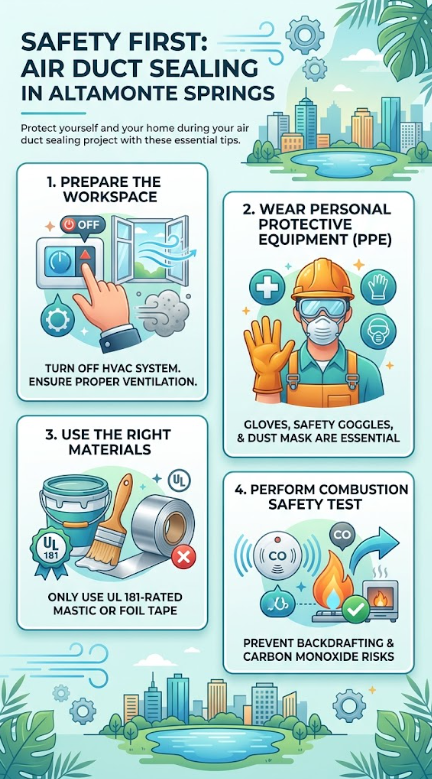
Getting ready for an Aeroseal job doesn't take long. These five steps make the work go faster and keep your household comfortable through the process.
Clear the registers and air handler access. Move furniture, boxes, or anything stored near vents. Your technician needs to temporarily seal each register before starting, and blocked access slows the job down.
Get pets and young children out of the house. This isn't an abundance-of-caution suggestion — it's part of the standard protocol. Plan for them to be with a neighbor, at a park, or anywhere outside the home for the duration.
Tell your technician about any sensitivities before setup begins. If anyone in your home has a documented chemical sensitivity or a serious respiratory condition, mention it before the crew touches their equipment. Timing matters.
Ask your service provider when to shut the system down. Some technicians prefer working with an HVAC system that hasn't been running all morning. Confirm what your specific company recommends for your setup before service day.
Cover or move items near open register locations. Electronics, art, anything you'd rather not expose to a fine mist near open vents — move it or cover it as a reasonable precaution.
What to Expect During the Aeroseal HVAC Duct Sealing Services Process
The workspace is contained from the start. Your technician seals every register and grille before the equipment runs so that all airflow passes through the duct system itself, not into your living areas. That's how the sealant gets to where the leaks are.
You may notice a faint smell during the process, similar to opening a new product off a shelf. It passes quickly. That's the polymer curing — and it's exactly what it's supposed to do. The Aeroseal sealant is UL-tested and approved. The technology came out of the Indoor Environment Program at Lawrence Berkeley National Laboratory, funded in part by the EPA and U.S. Department of Energy. We mention that not to impress anyone, but because homeowners reasonably want to know who developed what's going into their duct system.
Most Altamonte Springs families who step outside during service come back to a home that smells completely normal within an hour or two of completion. If something feels off after that window, keep the windows open and call your service provider. That's part of what we're there for.
Post-Service Safety Steps for Altamonte Springs Homeowners
Four things to do after the technician leaves:
Ventilate for at least 30 to 60 minutes. Open windows and run exhaust fans. Even a short cross-ventilation pass moves residual particles out of the air faster than just waiting.
Change your air filter within 48 to 72 hours. Polymer particles that didn't seal a leak will have accumulated in your filter media during pressurization. A fresh filter keeps them from recirculating through the system.
Keep pets and sensitive occupants out for 1 to 2 hours post-service. That window is enough for the sealant to cure and the air to clear. When there's any doubt, give it a bit more time.
Run the HVAC fan only before resuming normal operation. With a fresh filter already installed, run the fan without heating or cooling for 15 to 20 minutes. It flushes remaining airborne particles through the filter before your system goes back to full load.
Questions to Ask Your HVAC Air Duct Sealing Company in Altamonte Springs
Any company you hire for aeroseal HVAC duct sealing services in Altamonte Springs should answer these without hesitation. If the answers feel vague, that's useful information too.
Are your technicians Aeroseal-certified? Certification means training on the specific equipment and safety protocols — it's not the same as general HVAC experience, and it matters.
Do you measure leakage before and after, and do I get the report? Legitimate Aeroseal work always produces verified before-and-after diagnostic measurements. Ask for the report in writing.
What sealant product do you use, and is it UL-listed? Genuine Aeroseal products are UL-tested and approved. Other sealant materials may not carry those credentials.
What do your technicians wear during injection? Ask directly. Technicians should wear proper respiratory protection during the sealant injection phase.
How do you arrive at the HVAC duct sealing cost estimate for my home? A written estimate based on a diagnostic assessment of your specific system is the standard. Any company quoting a flat rate sight-unseen before looking at your home is worth questioning.
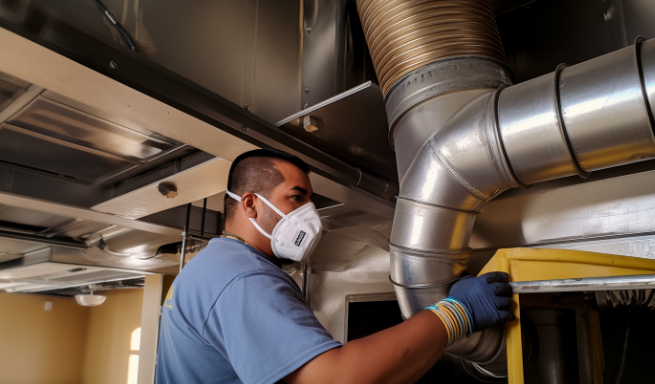
"In twelve years of sealing ducts across Seminole County, the homes that surprise people most are the ones with attic-routed flex ducts from the late '80s. They're leaking in places no manual repair can reach, and the before-and-after numbers on those jobs are eye-opening. That verified report isn't just paperwork — it's proof of what was accomplished inside walls the homeowner never has to open."
Essential Resources
1. U.S. Environmental Protection Agency
EPA's core guidance on indoor pollutant sources, ventilation strategies, and air quality for residential homes, including how HVAC systems and ductwork affect what your family breathes.
Source: Improving Indoor Air Quality
2. ENERGY STAR
ENERGY STAR's overview of duct sealing benefits, efficiency benchmarks, and the measured impact of duct leakage on heating and cooling performance in typical U.S. homes.
Source: Duct Sealing
3. U.S. Department of Energy
The DOE's practical guidance on duct leakage causes, energy loss implications, and when professional duct sealing makes sense — with specific notes on unconditioned attic duct runs like those common throughout Altamonte Springs.
Source: Minimizing Energy Losses in Ducts
4. American Society of Heating, Refrigerating and Air-Conditioning Engineers
The recognized national standards for residential ventilation system design and indoor air quality, referenced in state building codes, ENERGY STAR programs, and EPA guidance.
Source: ANSI/ASHRAE Standards 62.1 and 62.2
5. Centers for Disease Control and Prevention
CDC guidance on improving indoor air quality through ventilation, filtration, and HVAC maintenance, including recommendations for homeowners managing respiratory health in sealed residential environments.
Source: Taking Steps for Cleaner Air
6. National Center for Healthy Housing
NCHH's resource connects duct sealing and HVAC maintenance to occupant health, with specific guidance on return-duct sealing and contaminant recirculation.
Source: Ventilation and Indoor Air Quality
7. Wikipedia
Local background on Altamonte Springs — development history, housing stock, and climate context that directly shapes HVAC system age and duct leakage patterns in homes throughout the area.
Source: Altamonte Springs, Florida
Supporting Statistics
20 to 30 percent of the air moving through the duct system in a typical home escapes through leaks, holes, and poorly connected ducts — and the result shows up on your utility bill every month, not just during peak season.
Source: ENERGY STAR — Duct Sealing
2 to 5 times higher — that's how much higher indoor pollutant concentrations can run compared to outdoor air, according to EPA research. In Altamonte Springs homes where windows stay closed and the AC runs year-round, those concentrations don't flush out the way they would in a climate with real seasonal ventilation.
Source: U.S. EPA — Introduction to Indoor Air Quality
Hundreds of dollars per year in added heating and cooling costs can come directly from ducts leaking conditioned air into unconditioned spaces. In Altamonte Springs homes with duct runs through attic spaces that regularly hit 130 to 140 degrees in summer, that loss compounds faster than it does almost anywhere else in the country.
Source: U.S. Department of Energy — Minimizing Energy Losses in Ducts
Final Thoughts and Opinion
Here's our honest take after years of running Aeroseal jobs throughout Altamonte Springs and Seminole County: the safety side of this service is well-engineered and well-tested. The sealant has a serious research pedigree. The process is contained. The precautions are short and manageable. What separates a smooth job from a stressful one isn't the product — it's whether the homeowner went in informed and whether the company doing the work knows what they're doing.
Across thousands of service calls in Central Florida, the homeowners who get the best results are the ones who asked the right questions before they signed anything. Knowing what a qualified HVAC air duct sealing company in Altamonte Springs should do — and asking for it specifically — gives you a real benchmark. Any company worth hiring will welcome those questions. Hesitation to answer them is itself worth knowing.
Altamonte Springs homes run harder than most. Twelve months of AC load, sealed construction that limits natural air exchange, duct systems aging in hot attic spaces that punish flex duct every single summer. The case for properly sealed ductwork here isn't abstract. It's financial, it's practical, and it shows up in the before-and-after report every time.
Frequently Asked Questions
Is Aeroseal HVAC duct sealing safe for homes with pets or young children in Altamonte Springs?
Yes, with the standard precautions. Pets, infants, and young children should be out of the home during service and for 1 to 2 hours after. The Aeroseal sealant is water-based and non-toxic once cured — but keeping sensitive occupants clear during the injection phase is part of the protocol any qualified HVAC air duct sealing company in Altamonte Springs should follow without being asked.
How long does aeroseal HVAC duct sealing take in an Altamonte Springs home?
Most single-family homes in the Altamonte Springs area take 3 to 5 hours. Larger homes or more complex duct configurations may run longer. Your technician will give you a realistic estimate after the initial diagnostic. Plan to be out of the home for at least that window if you have pets or anyone with respiratory sensitivities.
What is the HVAC duct sealing cost in Altamonte Springs?
Typical estimates for Aeroseal duct sealing in Altamonte Springs range from about $1,500 to $3,500, depending on home size, duct complexity, and pre-service leakage levels. The number that actually matters for your home comes from a diagnostic assessment, not a flat rate quoted before anyone has looked at your system. Any company giving you firm pricing before seeing your home is worth questioning.
Do I need to be home during the aeroseal HVAC duct sealing services appointment?
Someone should be there at the start to walk through the home with the technician and confirm the scope of work. After that initial walkthrough, most families step out during the service, which is genuinely the better approach if you have pets, young children, or anyone with respiratory sensitivities at home. You don't need to stay for the full job.
How do I know if my HVAC air duct sealing company in Altamonte Springs is following safe protocols?
Ask directly, and ask specifically. A qualified company should name the sealant product they use and confirm it's UL-listed, walk you through how they seal registers and contain the workspace before starting, explain what before-and-after leakage testing looks like, and confirm their technicians wear proper respiratory protection during injection. Clear, confident answers are a good sign. Vague ones are not.
Will Aeroseal duct sealing improve my indoor air quality after the service?
In most cases, yes — and the improvement tends to be real for Altamonte Springs homes with significant pre-service leakage. Leaky return ducts pull attic dust, insulation particles, oak pollen, and other material from unconditioned spaces and send it into your living areas. Seal those pathways and that stops. Pair the service with a filter change and most homeowners in our service area notice a real difference within a few days.
How soon can I run my HVAC system after aeroseal HVAC duct sealing services are complete?
Your technician will confirm the timeline based on your specific system, but normal HVAC operation can typically resume within a few hours of completion. Our recommendation: install a fresh filter first, then run the system fan without heating or cooling for 15 to 20 minutes before switching back to full cycles. That brief pass flushes any remaining airborne particles through the filter before your system goes back to full load.
Ready to Put These Safety Tips to Work in Your Altamonte Springs Home?
Our team walks you through every step before service day — from the pre-job checklist to the verified before-and-after leakage report — so you go in knowing exactly what to expect.
Here is the nearest branch location serving the Coral Gables FL area…
Filterbuy HVAC Solutions - Miami FL
1300 S Miami Ave Unit 4806, Miami, FL 33130
(305) 306-5027